
Understanding pricing

When people look at the retail price of a product, they usually compare it to the most visible part of what they receive, the finished product or service, and then try to relate it directly back to a simple input which is usually the manufacturing cost. This comparison is incomplete.
A price reflects the full system required to deliver something consistently according to the positioning and characteristics of each business. It is not determined by production alone, but by everything else around it: design, sampling, testing, production, infrastructure, supply chain, quality control, and the fact that the output has to be repeatable at a defined standard, not produced once in ideal conditions. Think of a jar of jam and how often we hear people say that "they could do that themselves for a fraction of the price".
This process also includes risk, as not every input leads to perfect, usable output, and not every output meets the level required to be delivered to market. That variability is also part of the cost structure, even if it is not visible to the outside world.
There is also the operational layer that includes planning, management, coordination between different functions, and the ability to continue delivering without breakdowns as complexity increases or during critical moments.
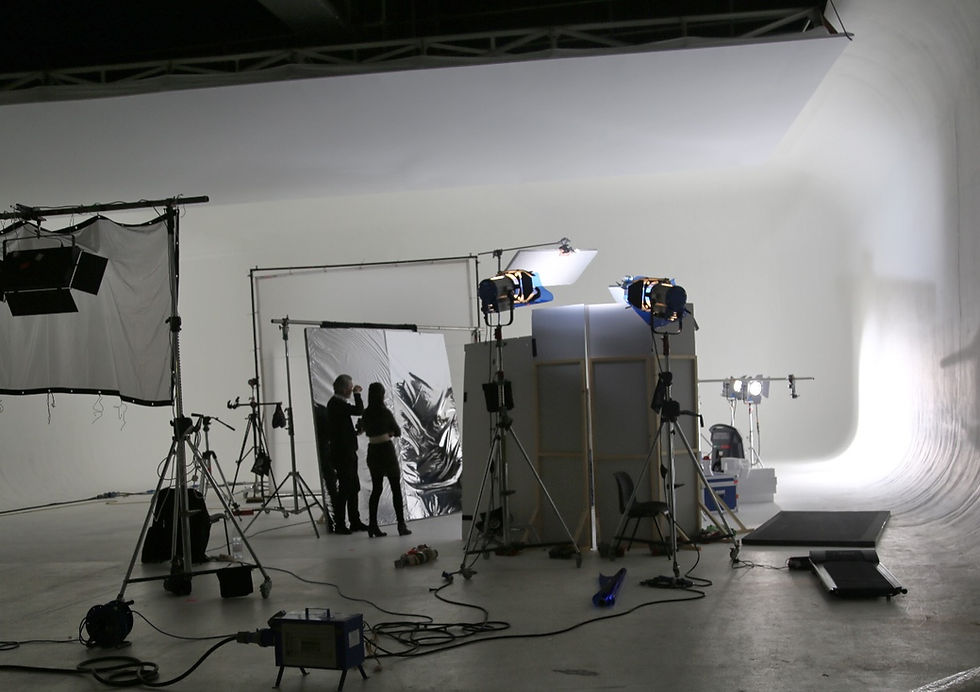
In recent years pricing has become particularly controversial in Luxury Fashion, with the media openly debating pricing issues such as a garment manufacturing cost being too low compared to its final retail price, which is as unfair, excessive or abusive. In some cases there is clear evidence of confirmed malpractice, but the truth is that this view isolates the part that relates only to the actual production cost. In reality, the price is also carrying everything that constructs the product’s position in the market, such as product presentations, campaigns, creative direction, photography, casting, distribution, retail environment, and the broader operational and commercial structure that supports the brand and makes that particular product and brand stand out.
It is not always easy to understand the internal functioning of a business, especially what happens inside offices and headquarters, as these are not open to the public but think of the store environment itself, which is directly interacting with the customer: physical stores in prime locations, store design, construction and maintenance, sales teams, customer service, inventory management, and the ongoing cost of operating spaces where products are not only sold, but presented and experienced. Even online stores require a great deal of time and expertise to be built and managed on a daily basis. These are continuous operational costs that go far beyond manufacturing. At that point, the product is no longer defined by its production cost alone. It is the output of an entire system designed to place it within a specific market context.
Having said that, some of the top luxury houses in Europe used to operate with a tighter relationship between production cost and retail price, with a more significant share of manufacturing still based in Europe, and a different balance between production, working conditions and brand-driven value, but that relationship has shifted in recent years to a much larger proportion of the final price reflecting brand positioning, marketing, distribution strategy, and retail structure rather than the actual production cost of the item itself, not to mention the questionable conditions in which some of these manufacturing facilities operate all over the world.
Another part of the issue is how pricing and business decisions are discussed online. Complex business models are often reduced to short posts or comments, with simple comparisons and people reacting to the final price without understanding or looking into how a business actually operates.
Misunderstandings happen when, from the outside, pricing is reduced to the cost of making something, when in practice, pricing reflects the cost of making something exist in the market in a controlled, repeatable, and well positioned way, including all that it takes for that item to exist, reliably and at scale.
On a separate note, many businesses still struggle to understand how to price their own products properly. When we suggest a different approach, it is often met with surprise. In many cases, pricing is set based on internal assumptions or habit rather than a clear view of value, positioning, and market context. As a result, it is often not fully aligned with what the product is actually meant to represent in the market. When a more structured approach to pricing is introduced, it often challenges how things have always been done, which is where the reaction tends to come from.
For more information on pricing strategy, please reach out to us at ask@trafficseven.com.

Comments